

10-10-2026
Oxygen Absorbers: How They Work and Why They Are Used in Packaging
Discover how oxygen absorbers work, the benefits they offer and why you should use them in packaging

The presence of oxygen inside a package can compromise the quality and shelf life of many products. Oxidation, colour changes, loss of certain sensory properties and deterioration are just some of the effects that can occur when the contents are exposed to air.
To reduce these risks, oxygen absorbers offer a practical and effective solution. When placed inside appropriately designed packaging, they help create conditions that are more favourable for preservation, protecting products during storage and distribution.
What Are Oxygen Absorbers?
Oxygen absorbers are devices designed to reduce the amount of oxygen inside a sealed package.
They generally take the form of small sachets containing substances that react with oxygen and bind it through specific chemical processes.
One of the most widely used technologies relies on iron-based compounds, which react with the oxygen present inside the package. Other formulations are also available to meet specific application requirements.
The aim is to limit oxidation and, under appropriate conditions, help inhibit the growth of certain aerobic microorganisms.
This function is particularly important in the food industry, for example when packaging sandwich bread and other baked goods, as well as pasta products.
How They Work Inside Packaging
Oxygen absorbers work on a specific principle: removing oxygen from the atmosphere inside the package.
Once the device has been inserted and the packaging sealed, the active material begins to absorb the available oxygen. The speed and effectiveness of the process depend on the formulation used, temperature, humidity and the characteristics of the packaging.
To achieve satisfactory results, it is essential for the packaging to have good oxygen barrier properties. Packaging that is too permeable would allow outside air to enter continuously, reducing the absorber’s effectiveness.
Correct sizing is also important: the device’s capacity must be assessed based on the volume of residual air, any oxygen present in the product and the intended shelf life.
In the food industry, oxygen absorbers can help limit fat rancidity and, under appropriate conditions, the growth of aerobic moulds. These issues can affect products such as cereals, rice, oats, wheat, beans and nuts during storage.
Why Use Oxygen Absorbers?
The use of oxygen absorbers can offer several benefits, particularly when product quality depends on limiting exposure to air.
Key benefits include:
-
Reduced oxidation: helps limit changes caused by oxygen.
-
Preservation of product characteristics: helps preserve colour, aroma and quality when these are sensitive to oxidation.
-
Support for product preservation: may help extend the shelf life of certain products when incorporated into a suitable packaging system.
-
Protection during distribution: helps maintain the intended conditions during transport and storage.
These benefits make oxygen absorbers particularly appealing to companies looking to improve the effectiveness of their protective packaging.
Key Application Areas
Oxygen absorbers are used in a variety of sectors, each with different requirements and methods of use.
Food industry
They can be used in packaging for dry foods, snacks, baked goods, sandwich bread, pasta, cereals and other foods sensitive to oxidation, provided the devices are specifically suitable for food applications.
They can be particularly useful for counteracting fat rancidity and limiting the growth of certain aerobic moulds, helping to preserve packaged food products.
Pharmaceutical and nutraceutical industries
Some formulations can help protect products and components that are sensitive to oxygen. In these cases, selection requires technical assessments and compliance with applicable requirements.
Components and industrial products
In certain applications, reducing oxygen can complement other protective measures, particularly for materials susceptible to oxidation.
The choice always depends on the product’s characteristics, the packaging material and the storage conditions.
Oxygen Absorbers and Desiccant Sachets: What Is the Difference?
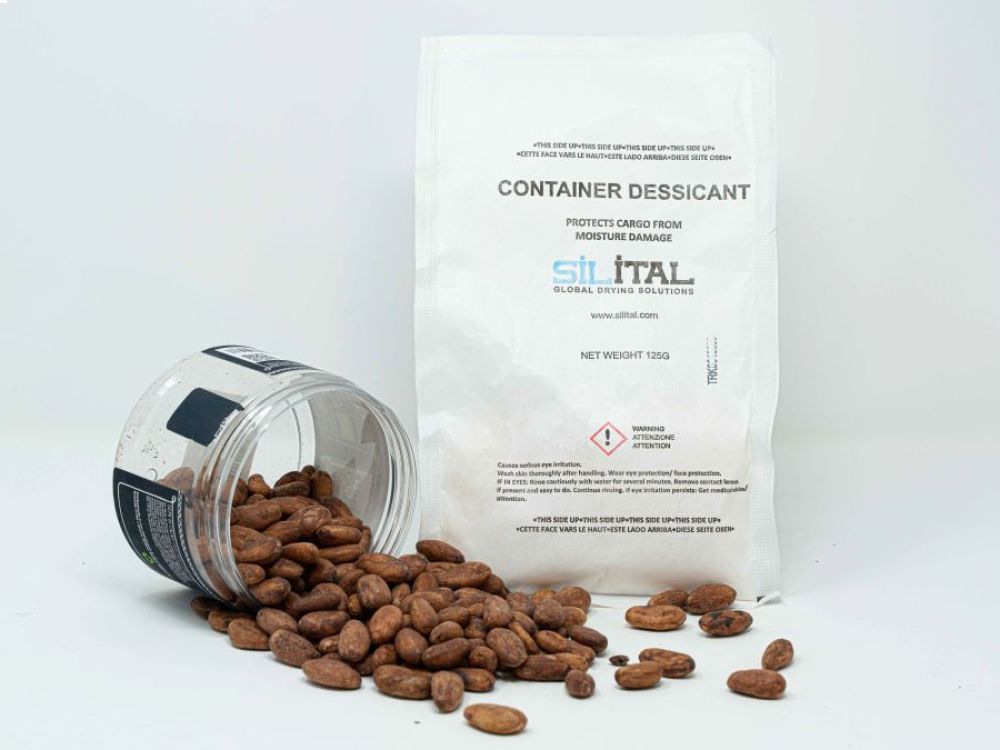
Although they are often associated with one another, oxygen absorbers and desiccant sachets perform different functions.
The former act on the oxygen inside the package, helping stabilise storage conditions and slow down degradation caused by oxidation. The latter control humidity using moisture-absorbing materials such as silica gel, activated clay or molecular sieves.
Oxygen can promote oxidation, while moisture can contribute to condensation, mould growth and the degradation of organic materials during extended storage periods.
In some applications, controlling both factors can be useful. However, using them together must be carefully assessed, as some oxygen absorbers require specific humidity conditions to function correctly.
The Importance of Choosing the Right Packaging
An oxygen absorber cannot, on its own, compensate for unsuitable packaging.
To ensure effective protection, it is necessary to consider the material’s permeability, seal quality, the amount of residual oxygen and the conditions expected during distribution.
Packaging must therefore be designed as a system in which every element contributes to preserving the product.
Oxygen absorbers are a valuable resource for companies seeking to reduce the risks associated with oxidation and improve the protection of packaged products.
Understanding how they work and how they differ from desiccant sachets makes it possible to identify solutions that are better suited to different requirements.
In protective packaging, properly managing oxygen and moisture helps preserve product quality throughout the supply chain.

